Brahma Kumaris Participation at COP30
Empowering Communities, Protecting the Planet
Report 3: 14. - 15. November 2025

As COP30 reached the end of the first week, the BK participation included a co-creative Workshop for Young Leaders which facilitated deep, reflective dialogue among Brazilian youth on the spiritual roots of environmental transgression and the power of shared values.

This was complemented by the Climate Wisdom Studio, which explored the learning gained from indigenous communities, what inspires change, the impact of prayers and meditation to create positive change and the potential of the Global Ethical Stocktake as a self-transformative tool. 

The week culminated in a Multi-faith Dialogue, which explored a number of key questions related to the Global Ethical Stocktake and resulted in rich conversations and sharing. 

Workshop for Young Leaders:
The Ownership Illusion: From Mine to Mutual
14. November 2025

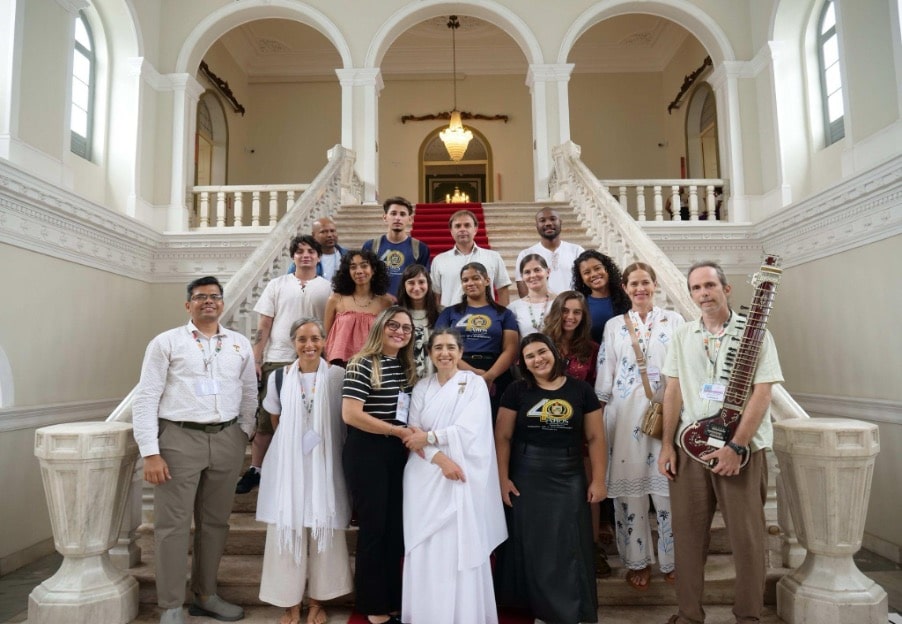
This interactive workshop was the result of a collaboration between young people from Brazil and members of the BK delegation. This partnership began online with regular preparatory meetings with young leaders from different community organisations in Brazil. The aim was to connect directly with local communities and address mining in the region. This was done from a spiritual perspective, focusing on prevailing ethical or moral patterns of transgression.  The theme of the workshop was a co-creative process among this group and brought together 20 young adults at the Museum of Art (MABE) in Belém for a reflective, heart-opening exploration of ownership, connection, and shared values.

The session began with a gentle, wordless connection exercise which created a subtle sense of unity and presence – an embodied reminder that “not everything we call ‘mine’ is truly ours” and that “many things we think we possess are simply experiences life lends us.”

After dividing into groups, each spent five minutes reflecting deeply on one of the four themes: “Respect”, “Mutual”, “Reconnect”, and “Mine”.  After each rotation, participants shared insights, stories, and personal reflections, often returning to the realisation that attachment to the idea of “my place, my thing, my space” can sometimes limit connection, while loosening the grip creates room for empathy and shared experience.

Following the group reflections, each participant contributed a final insight, enriching the collective understanding of how shifting from mine to mutual can reshape relationships, communities, and even our relationship with the planet

Maureen Goodman, Programme Director of Brahma Kumaris, UK, then shared about the fundamental difference between the indigenous and dominant worldview.  She highlighted that when we think we own something this Illusion makes us ‘clingy’ and this behaviour causes us sorrow.  When we are in the awareness of self dignity we don’t depend on others but only take from the highest source.

To close the gathering, Maureen spoke a meditation commentary about reconnecting with the original self and our beautiful planet.

The workshop left participants with a clearer sense of how values like humility, mutuality, and reconnection can guide personal and collective transformation – inviting everyone to continue exploring how to live with openness, authenticity, and shared responsibility.


Climate Wisdom Studio:
Empowering Communities, Protecting the Planet
14. November 2025

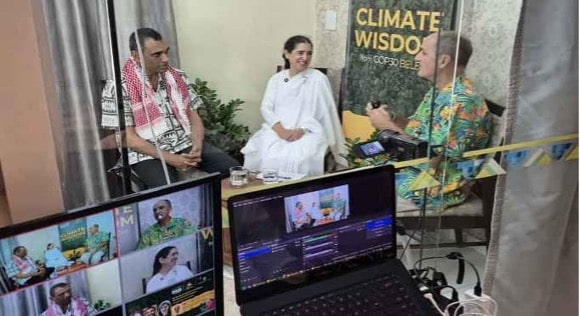
In this session, Golo Pilz spoke with Kumi Naidoo, President, Fossil Fuel Non-Proliferation Treaty, Karenna Gore, Director, Centre for Earth Ethics and Maureen Goodman, Programme Director Brahma Kumaris, UK.

From Left to Right: Kumi Naidoo, Maureen Goodman and Golo Pilz.

Kumi Naidoo, shared that  80% of diversity on the planet is protected by indigenous people, who live in a mutually interdependent relationship with nature. On the why and how of change, he said, people change when they are touched inside their soul, and the best place to begin is for communities to protect what they love.  We also need to take care of people’s mental health, and bring back the richness of spiritual vision and inclusion.

Maureen Goodman, shared on the indigenous world view of connectedness. When we act out of love for our planet, we feel motivated to make the necessary lifestyle changes. When we wake-up to what we really value, we find ways to make the needed changes. When we nurture ourselves spiritually we begin to see ourselves, others and the world differently. We realise our own  inherent goodness, qualities and the power of choosing sacred actions. 

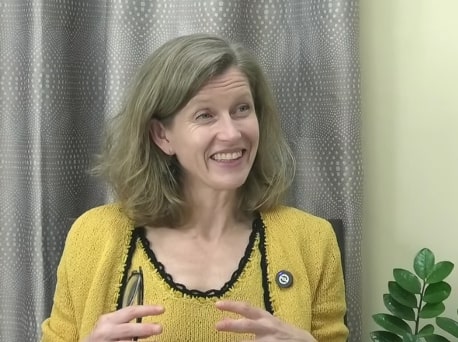
Karenna Gore, as the Co-Leader for the North American Global Ethical Stocktake (GES) shared how the GES is actually a tool for transformation, as it brings in human perception and behaviour. Data and science aren’t enough to bring about change. It gets us to look at our societal and collective perceptions. Also, it is a call towards a different way of knowing. embodied knowing, and knowing ourselves in a deeper and more embodied way.

Karenna Gore

The Climate Crisis is a Spiritual Crisis:
A Multifaith Global Ethical Stocktake Event
15. November at TED Countdown House

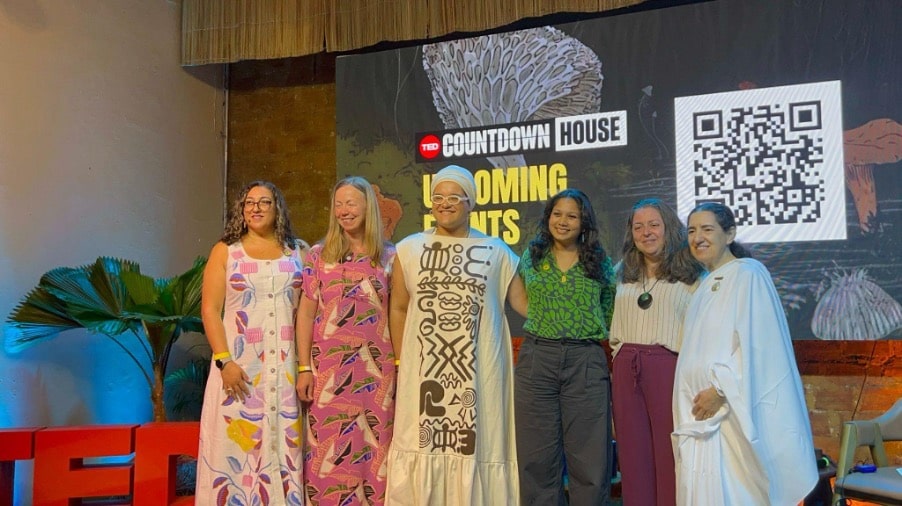
From left to right: Nika Sinai, Office of External Affairs Director for the Baha'i community in Australia; Dr. Lorna Gold, Executive Director, Laudato Sì Movement; Thaynah Gutierrez, Geledés Black Women's Institute; Samira Siddique, Director of Strategic Initiatives, Center for Earth Ethics; Archbishop Marinez Rosa dos Santos Bassotto; Maureen Goodman; Programme Director, Brahma Kumaris UK.

The TED Countdown House has been curating events during COP30. One of these events was a Global Ethical Stocktake Dialogue organised by Project Dandelion, Center for Earth Ethics, Laudato Si’ Movement, Women, Faith and Climate Network, Brahma Kumaris and the Baha’i International Community. The focus of the event was on the role of faith in building a just and regenerative future.

Maureen Goodman, Brahma Kumaris, was invited to begin the event with a meditation. She spoke a few words guiding the participants to remember the sacred connection we have with ourselves,  the Divine and with Mother Earth. She then led everyone into a powerful moment of deep silence. Dr Laura Gold, Laudato Si’ Movement,  then shared that what is really needed now is transformation, not just a process of transition.

There was then a beautiful tapestry of dialogue and reflections by speakers woven around three guided questions:

  • How can people of all faiths, or none, meaningfully take action, even when their governments aren’t doing enough?
  • How do we integrate spirituality, religion and traditional beliefs with meaningful climate action?
  • How can we discern different understandings of climate change: scientific, traditional, indigenous and spiritual, and approach our actions collectively, with dignity and with justice for the most vulnerable?

In closing, Marinez Bassotto, the first female Archbishop from Latin America, shared her experience of living in the Amazonia and seeing how similar indigenous beliefs and traditions are to mainstream faiths.  She urged everyone to consider their personal responsibility towards looking after our shared home.